
Planning an interlock driveway in Ottawa starts with the space you need, the boundaries of your property and the work included in the proposal. Before choosing a colour or pattern, make a simple project brief. It helps you discuss the same scope with each installer and spot questions that need an answer before construction.
This checklist focuses on planning a driveway project. For installation services, see Edenza’s interlocking driveway services in Ottawa. If you are planning a seating area instead, visit our backyard and interlocking patio page.
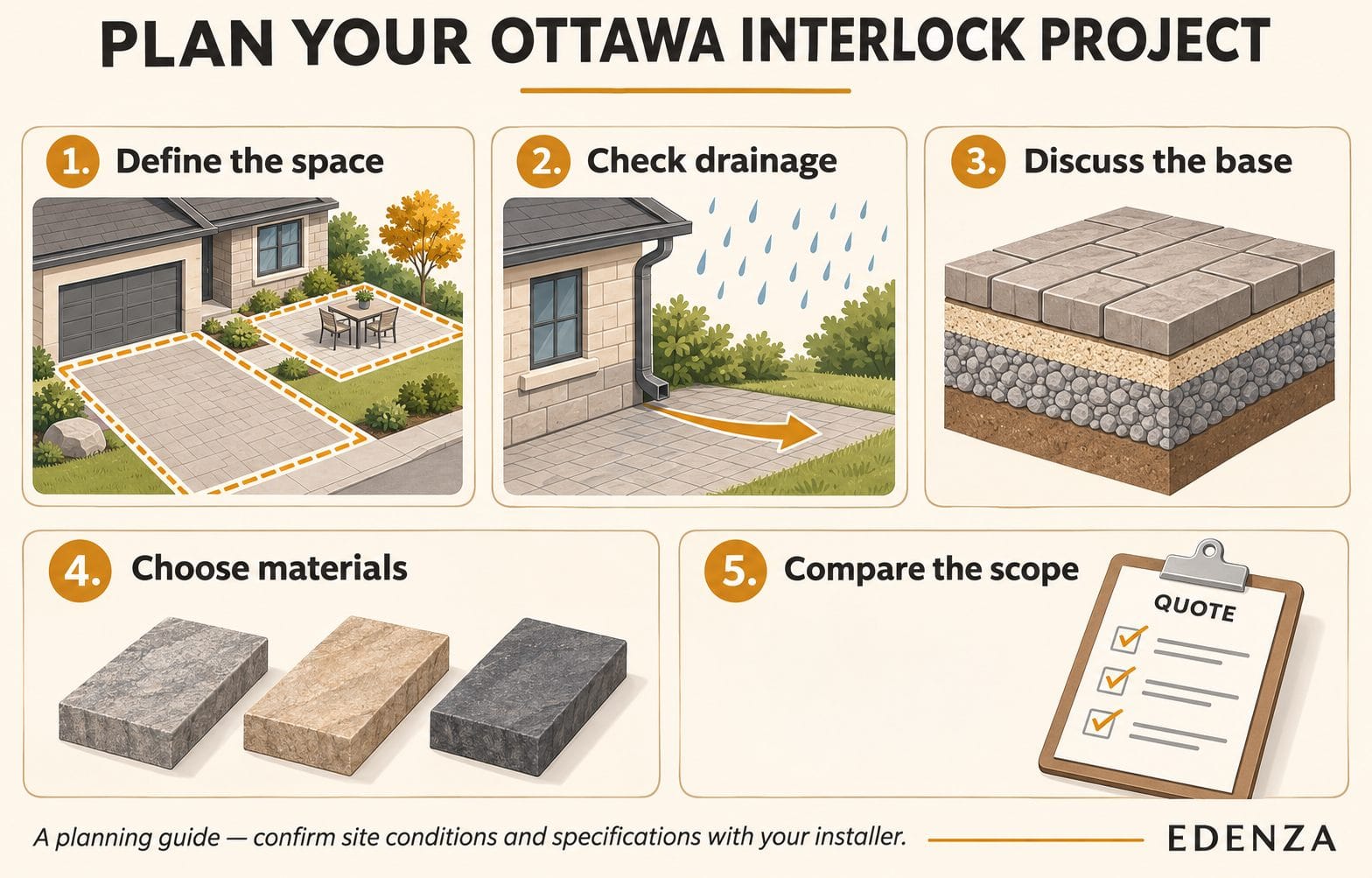
1. Describe the change you want
Are you replacing the existing surface, changing the driveway layout or adding a walkway to the entrance? Record the approximate dimensions and take photos from the street, garage and front door. Show gates, steps, planting beds and anything that limits access for equipment. Keep a separate list of features you would like to add so the essential work and optional extras can be discussed clearly.
2. Check access requirements before widening
The City of Ottawa regulates driveway and walkway access within the municipal right of way. Its access-permit guidance says a permit is required for constructing or modifying vehicular access, including widening. The City also identifies property boundaries and proposed access dimensions as information needed for planning.
The same page records the introduction of Access By-law No. 2026-139 on April 8, 2026. Check the City’s current instructions for your particular proposal before committing to a wider entrance or a new parking space. Approval depends on the property and applicable requirements; choosing interlocking pavers does not establish permission to change the access.
3. Discuss drainage and preparation
During a site visit, point out where water collects and where the driveway meets the garage, steps and neighbouring surfaces. Ask the installer to explain the proposed preparation and how these connections will be addressed. A photograph can start the conversation, but it cannot establish the condition of the ground below the existing surface.
For projects involving a change in levels or excavation, discuss the scope with our grading and site preparation team. Ask which details will be confirmed before work starts and how unexpected site conditions would be handled.
4. Select materials for the intended use
Tell your installer which areas will carry vehicles and which will be used for walking or seating. Review actual product samples and the manufacturer’s intended applications. Compare colours and surface textures beside your home in daylight. Ask about cleaning, joint care and the manufacturer’s maintenance instructions before making the final selection.
5. Compare the written scope
Use the same brief when requesting estimates. Ask each proposal to identify the measured area, removal and disposal, preparation, selected pavers, borders, joint treatment and any additional work. Confirm tax treatment, payment stages, timing and the terms that apply to the proposed work. A headline price alone does not show whether two proposals cover the same project.
Our interlocking paver pricing page is a starting point for discussing options. Request a written, site-specific estimate before budgeting around a published starting amount.
What if the driveway only needs a repair?
Describe any movement, uneven areas or damaged stones before requesting a replacement quote. Ask whether the affected area can be assessed separately. Our interlock repair and restoration service can be the next discussion when you want advice about an existing installation.
Bring your project brief to Edenza
Send your neighbourhood, approximate dimensions, photos and a short description of your priorities through our contact page. Mention any access changes and questions about drainage or existing pavers. We can then discuss the next step for your Ottawa property.
City source reviewed November 25, 2026. Municipal instructions can change; confirm the requirements that apply to your property with the City before construction.